Published
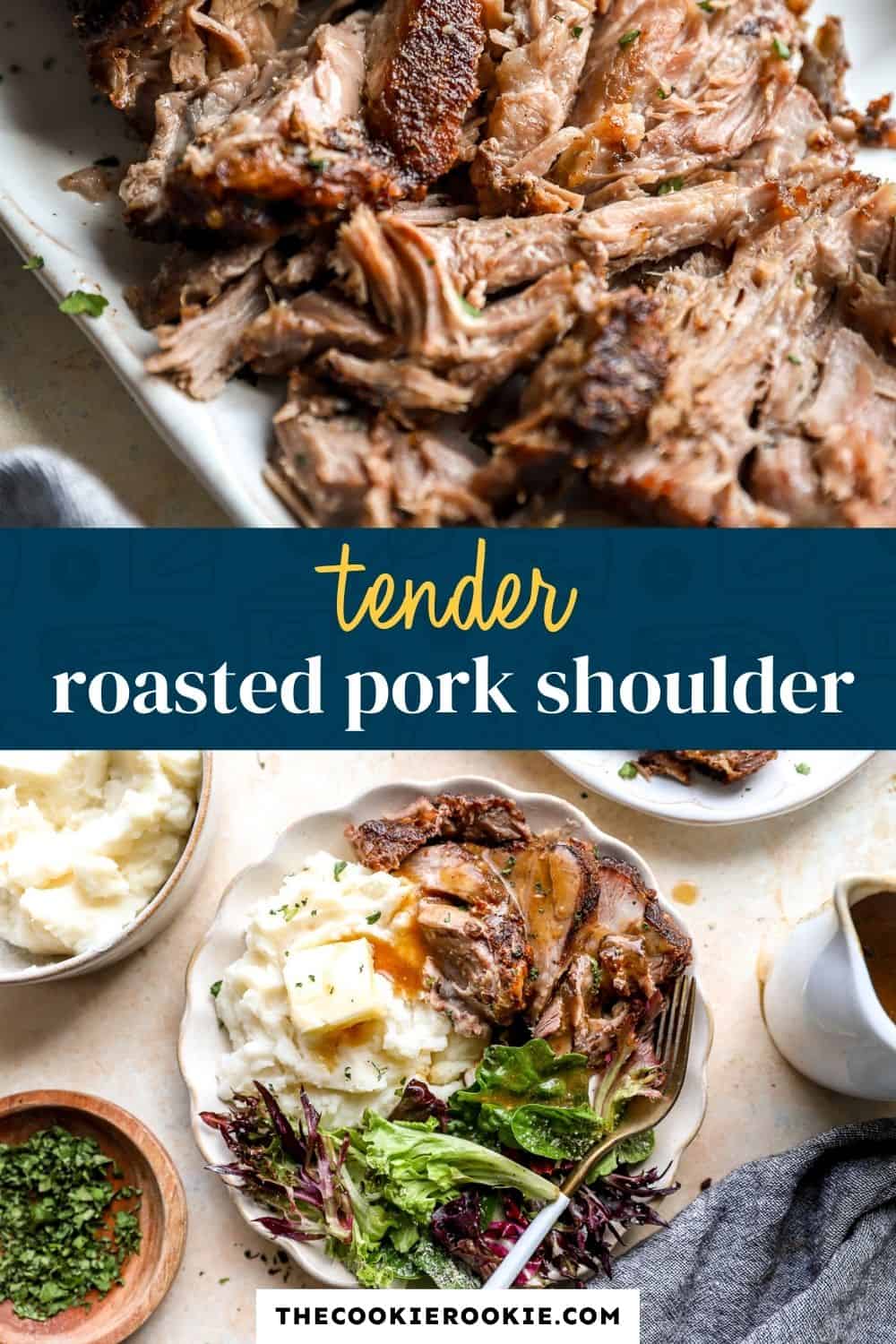
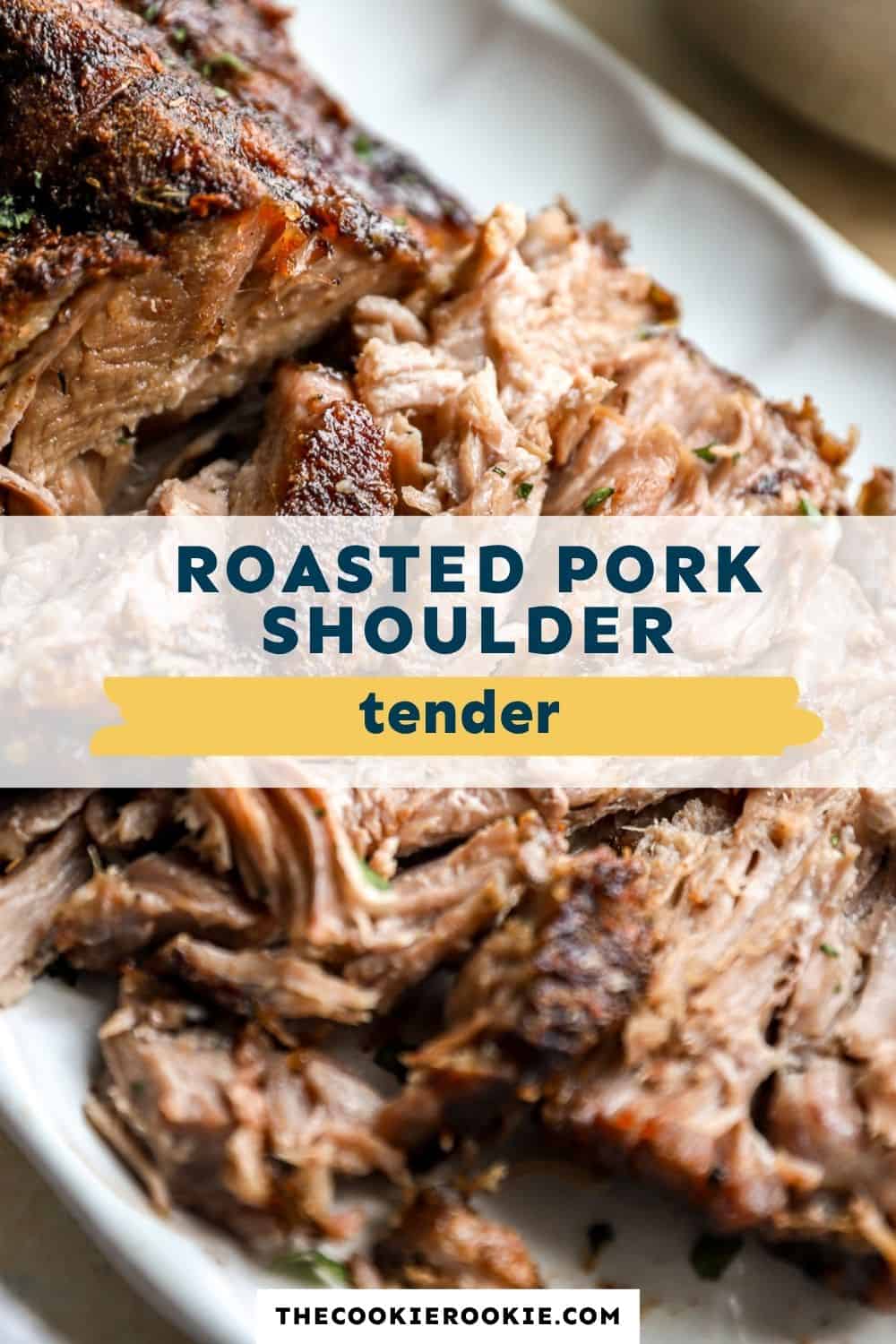
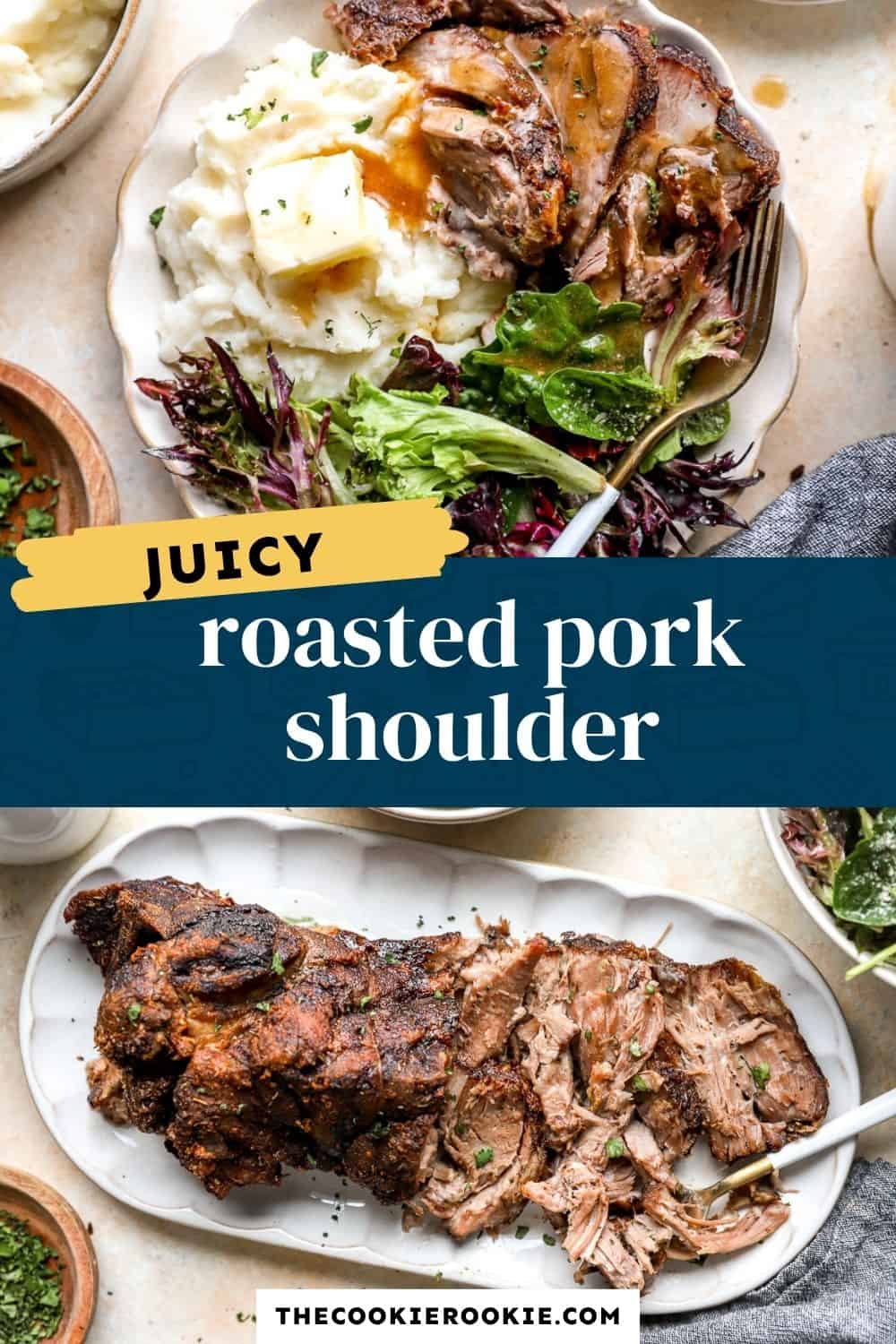
This roasted pork shoulder is the recipe you want when you need a comforting, no-fuss dinner that still feels impressive. A simple blend of spices, olive oil, garlic, Dijon, and broth transforms an affordable pork shoulder into juicy, tender meat with a deeply flavorful crust and rich homemade gravy. The roast starts at a high temperature for extra browning, then slowly cooks in the oven for 5 to 6 hours until it’s fall-apart tender. Whether you’re making a cozy Sunday dinner, feeding family for the holidays, or meal prepping for the week, this recipe delivers flavorful, foolproof pork every time.
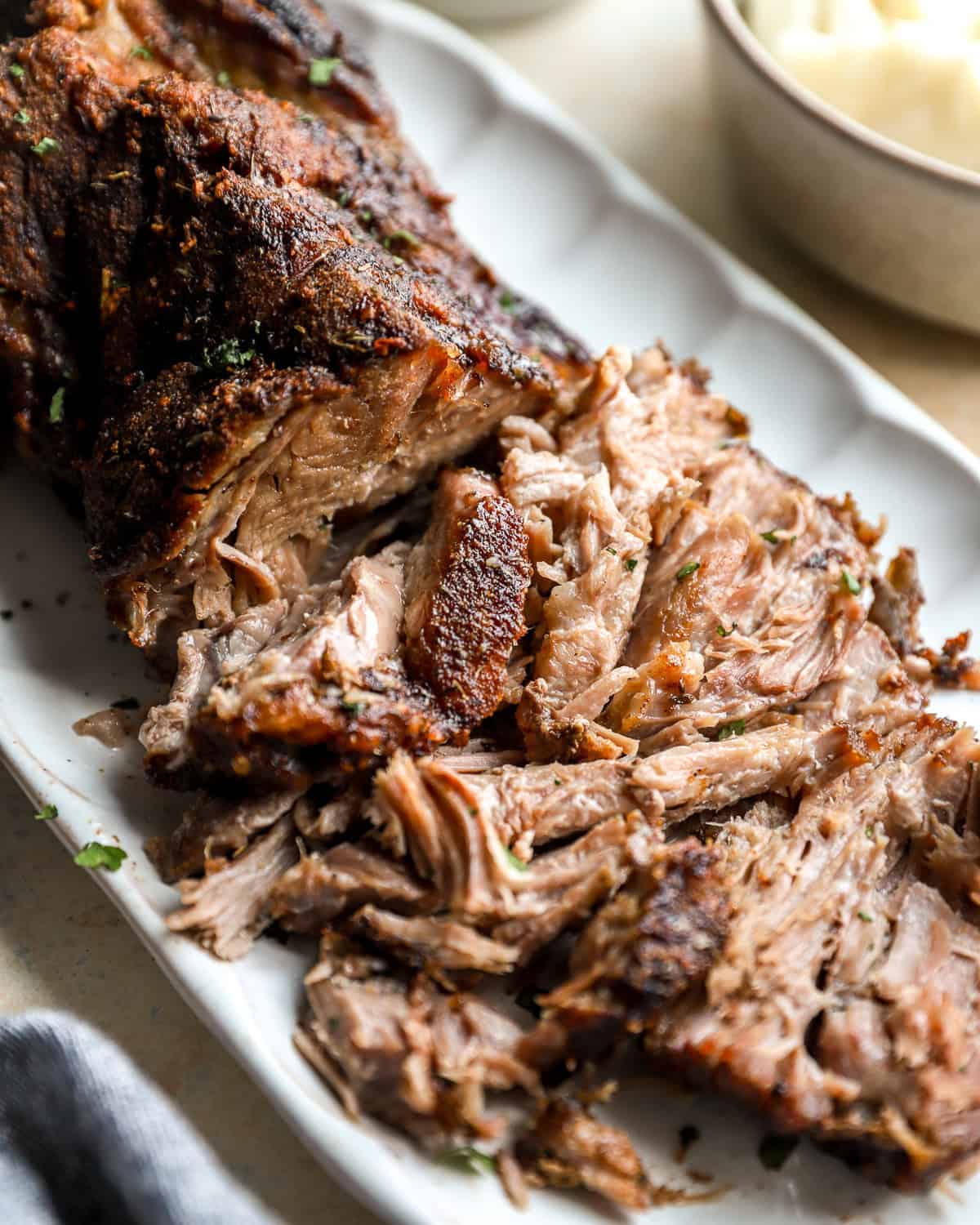
I’ve made pork shoulder a lot over the years, from a quicker Instant Pot pork shoulder version to this slow-roasted oven method. One thing I’ve learned is that this cut really rewards patience. Early on, I pulled a few roasts around 180°F because they looked done. But the meat still felt firm and harder to shred. Once I let the pork cook closer to 195–200°F, the texture completely changed. The meat turned juicy, tender, and perfectly fall-apart.
I also love starting the roast at high heat first. It gives the outside a deeply browned crust and makes the whole kitchen smell incredible. Around here, this is the kind of dinner I make when I want something cozy and comforting without spending all day actively cooking.
Tips for Beginners
- Tie the pork shoulder before roasting. I like tying the pork shoulder with kitchen twine before it goes into the oven because it helps the roast hold a more even shape while cooking. This keeps thinner sections from drying out too quickly and helps the pork cook more evenly from edge to center.
- Don’t rush the final internal temperature. I tested pork shoulder at several stopping points, and the biggest transformation happened after 190°F. Around 180°F, the pork was technically safe to eat, but it still felt tighter and slightly chewy when sliced. Once the roast reached closer to 195–200°F, the connective tissue finally melted down, and the meat became much more tender, juicy, and easy to shred. If your pork still feels tough, dry, or resistant when pulling apart with a fork, it almost always needs more time in the oven. Pork shoulder is one of those cuts where patience really pays off.
- Start with high heat for the best crust. That first blast of heat at 450°F makes a huge difference in both flavor and texture. I tested this recipe without the high-heat step, and while the pork still turned out tender, the outside stayed much paler and lacked that rich roasted flavor. Starting hot creates a deeply browned crust before the low-and-slow cooking begins, which gives the finished roast a much more savory, almost caramelized flavor around the edges.
- Use a meat thermometer instead of relying on time alone. Pork shoulder size and shape can vary a lot, so cook time is never exact. I always recommend checking the thickest part of the roast with a meat thermometer instead of relying strictly on timing. The pork should feel very tender when pierced, and the thermometer should slide in with very little resistance once it’s ready. I recommend cooking the pork shoulder until it reaches an internal temperature of 195–200°F for the most tender, fall-apart texture, since I find 165°F still leaves the meat too firm for shredding.
- Tent with foil if the roast starts browning too quickly. Every oven cooks a little differently, especially during long roasting times. If the top of the pork starts getting too dark before the inside finishes cooking, loosely tent it with foil. This protects the crust from burning while the connective tissue continues breaking down inside the roast.
- Let the pork rest before slicing or shredding. I know it’s tempting to cut into it immediately because the kitchen smells incredible at this point, but resting really matters here. Letting the pork sit for about 15 minutes helps the juices redistribute throughout the meat instead of running out onto the cutting board. The result is much juicier pork and cleaner slices or shreds.

Roasted Pork Shoulder
Ingredients
- 2 tsp salt
- 1 tsp garlic powder
- 1 tsp onion powder
- ½ tsp dried thyme
- ½ tsp paprika
- ¼ tsp ground pepper
- 1½ tbsp olive oil
- 3-4 lbs. pork shoulder roast
- 1 cup chicken broth
- 2 tbsp soy sauce
- 1 tbsp dijon mustard
- 2 cloves garlic minced
- 1 tbsp cornstarch + 1 tablespoon water
Instructions
- Preheat the oven to 450°F. Cut 4 pieces of kitchen twine. Wrap each piece of twine around the roast and secure with a knot. Ensure even spacing between each knot.3-4 lbs. pork shoulder roast
- Combine the salt, garlic powder, onion powder, thyme, paprika, and pepper in a dish. Rub the olive oil over the roast. Then, rub the spice mixture all over the pork roast.2 tsp salt, 1 tsp garlic powder, 1 tsp onion powder, ½ tsp dried thyme, ½ tsp paprika, ¼ tsp ground pepper, 1½ tbsp olive oil
- Transfer the roast to a roasting pan or baking dish.
- Bake for 30-35 minutes until the roast has developed a browned outer crust.
- Turn the temperature down to 275°F. Combine the chicken broth, soy sauce, dijon mustard, and garlic.1 cup chicken broth, 2 tbsp soy sauce, 1 tbsp dijon mustard, 2 cloves garlic
- Pour half of the mixture in the bottom of the pan. Store the remaining in the fridge. Continue roasting until the internal temperature of the pork reaches 180 to 200°F. Cook time is about 1.5 hours per pound. Check the roast throughout the cook time and cover with foil if it’s becoming too browned.
- When cooking is finished, let the roast rest on a cutting board for 15 minutes.
- Skim the fat from the top of the pan juices. Transfer any remaining pan juice to a saucepan along with the remaining chicken broth mixture from earlier. Bring to a boil. Combine the cornstarch and water and whisk into the mixture. Continue whisking until thickened like a gravy.1 tbsp cornstarch + 1 tablespoon water
- Slice or shred the pork and serve with gravy.
Equipment
- Kitchen Twine
- Roasting Pan
Becky’s Tips
- Roast pork shoulder low and slow for the most tender texture.
- Pork shoulder usually becomes most tender around 195–200°F.
- Start with high heat to build a flavorful crust.
- Use a meat thermometer for accurate doneness.
- Tent loosely with foil if the roast browns too quickly.
- Rest the pork for 15 minutes before slicing or shredding.
- The gravy thickens more as it cools.
Nutrition information is automatically calculated, so should only be used as an approximation.
 Did you make this? Leave a comment!
How to Make Roasted Pork Shoulder Step by Step
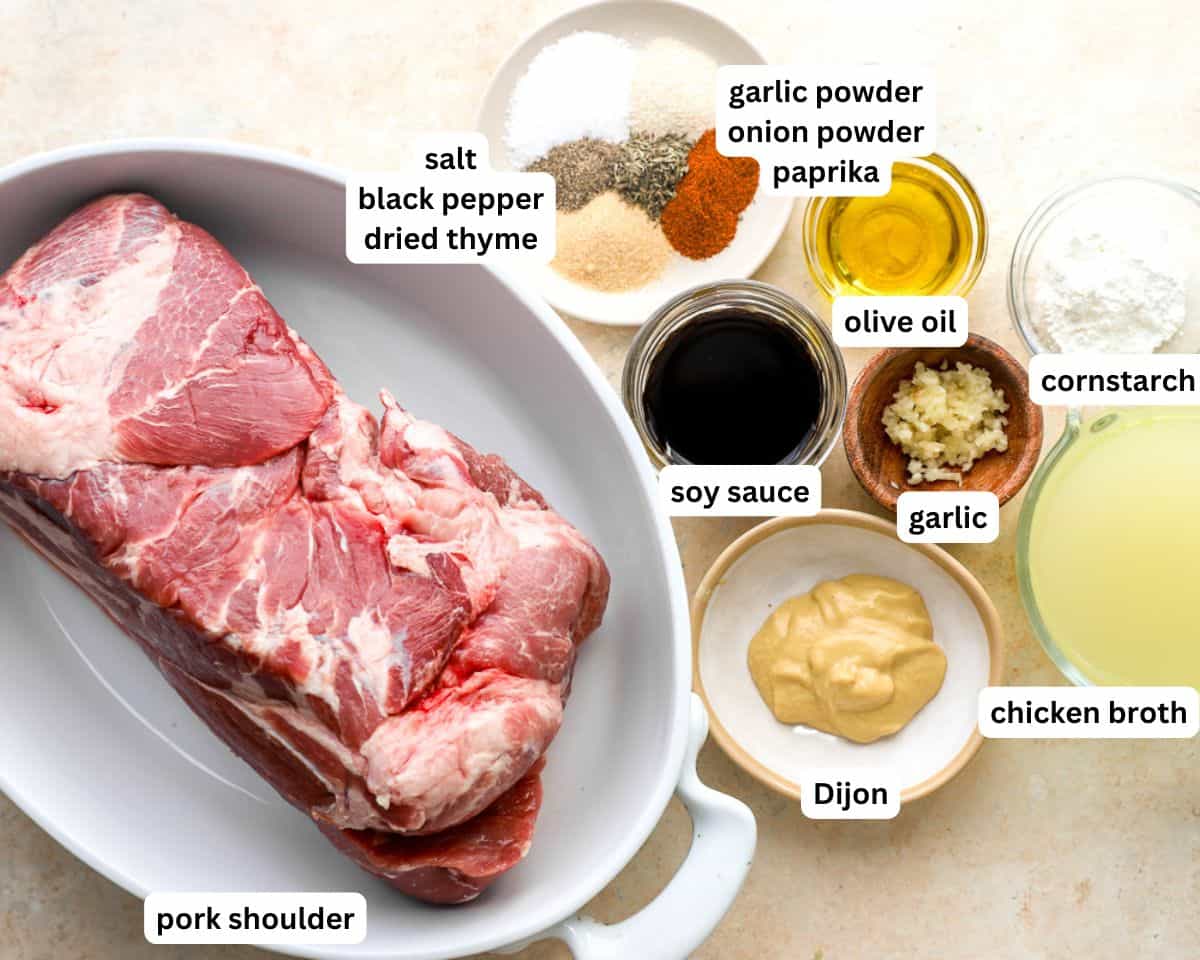
Gather the ingredients: Gather all the ingredients together and preheat the oven to 450°F.
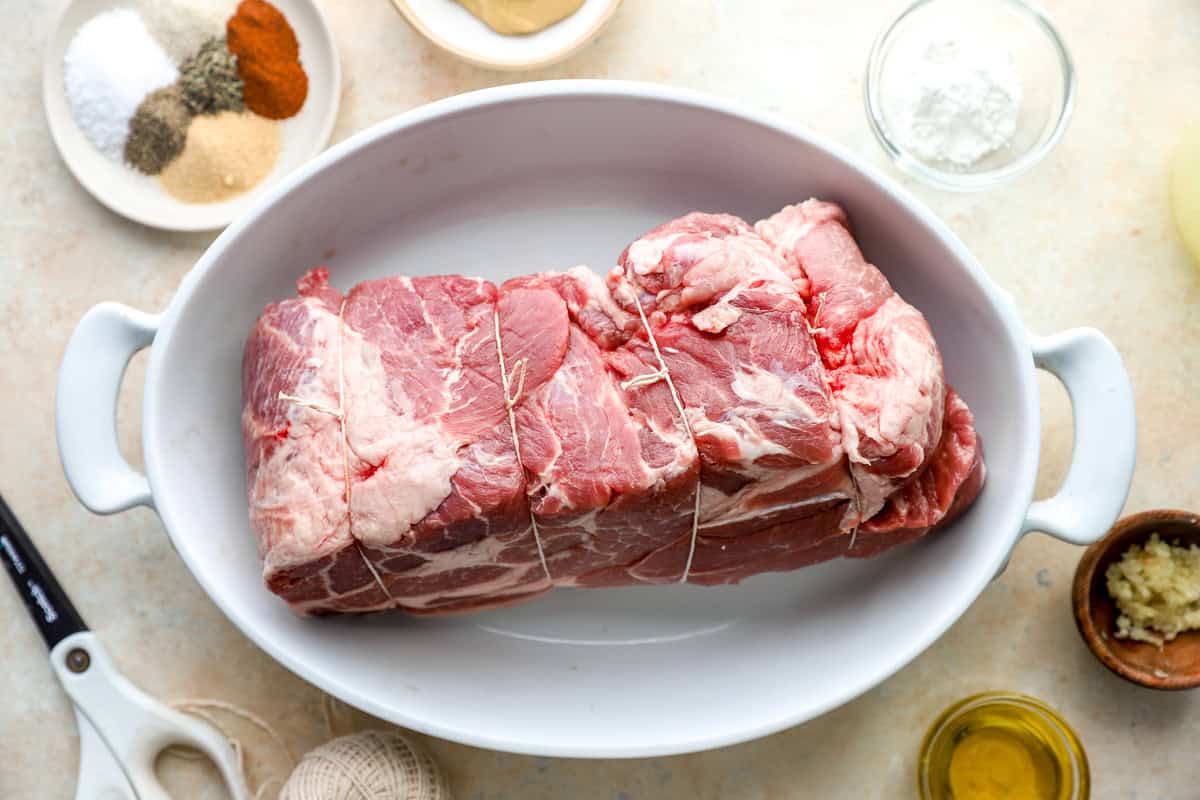
Tie and prep the pork: Cut 4 pieces of kitchen twine and tie them evenly around the 3–4 pound pork shoulder roast to help it hold its shape while cooking.
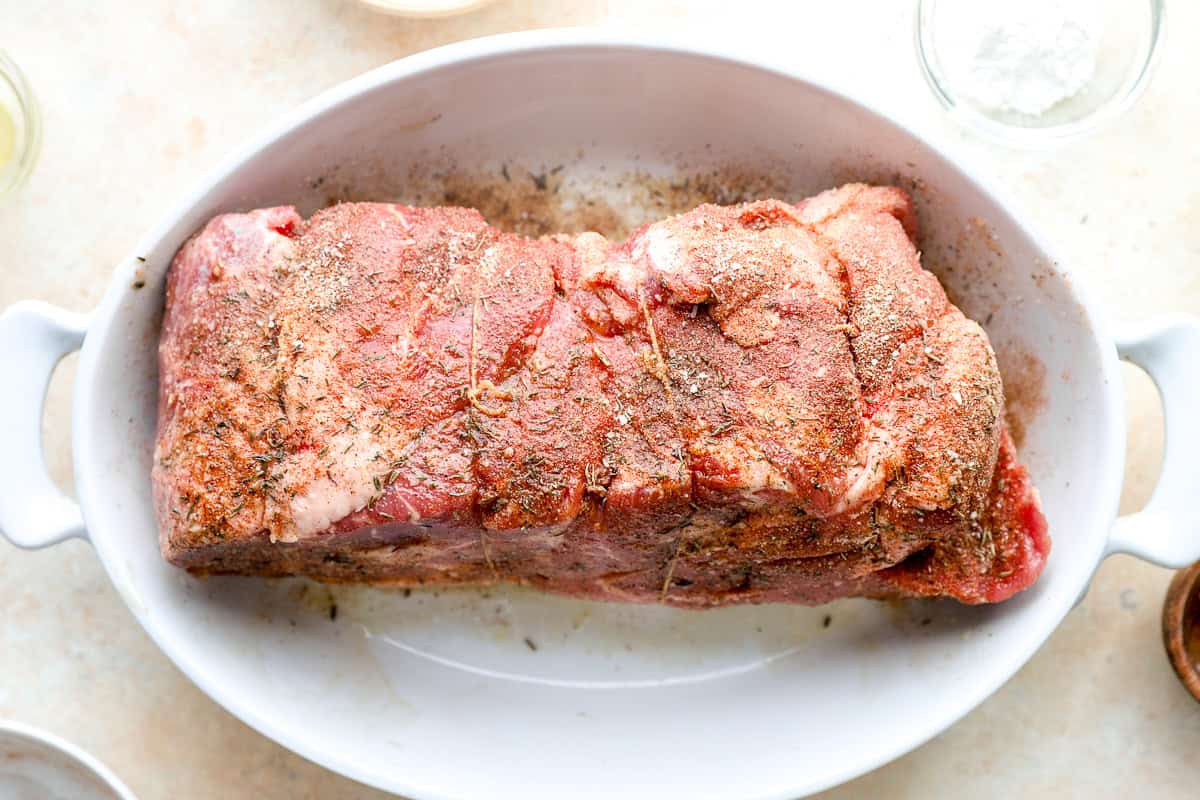
Season the pork: In a small bowl, combine 2 tsp salt, 1 tsp garlic powder, 1 tsp onion powder, ½ tsp dried thyme, ½ tsp paprika, and ¼ tsp black pepper. Rub 1½ tbsp olive oil all over the pork shoulder, then coat every side with the seasoning mixture until fully covered.
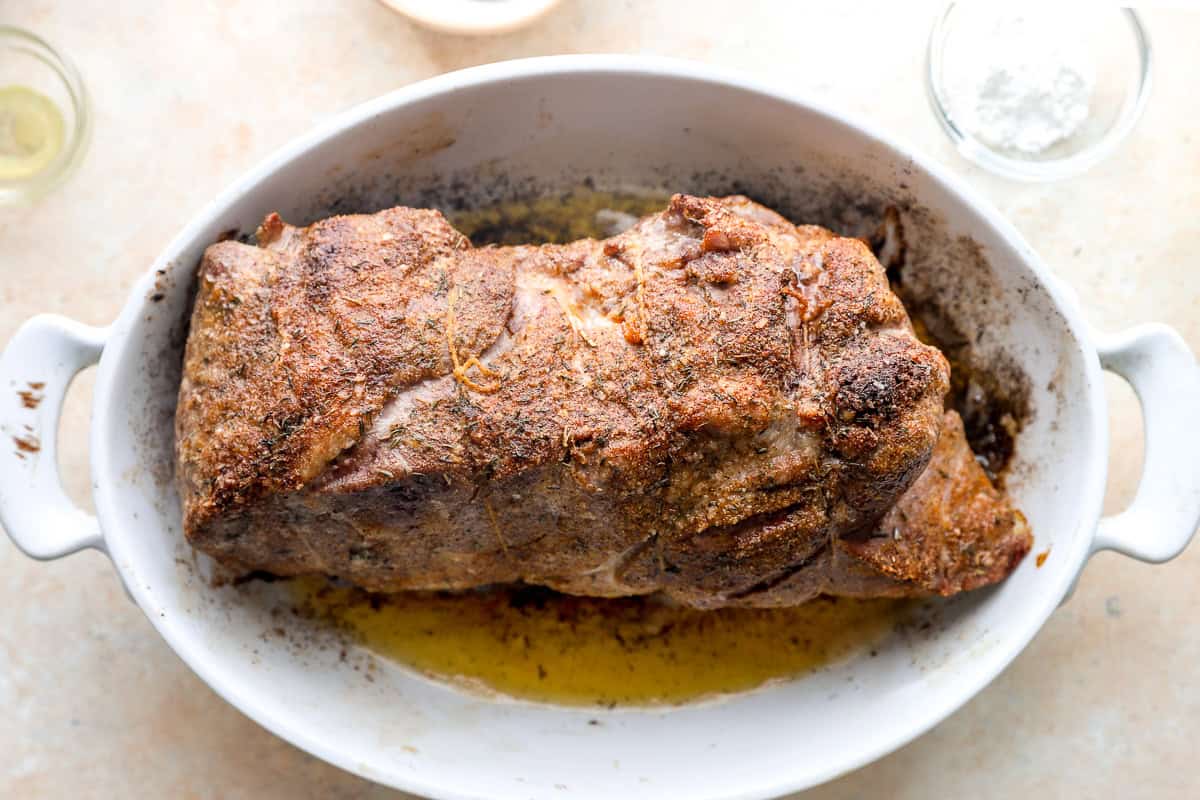
Roast at a high heat Transfer the seasoned pork shoulder to a roasting pan or large baking dish. Roast at 450°F for 30–35 minutes, until the outside develops a deep golden-brown crust with slightly crisp edges. Reduce the oven temperature to 275°F.
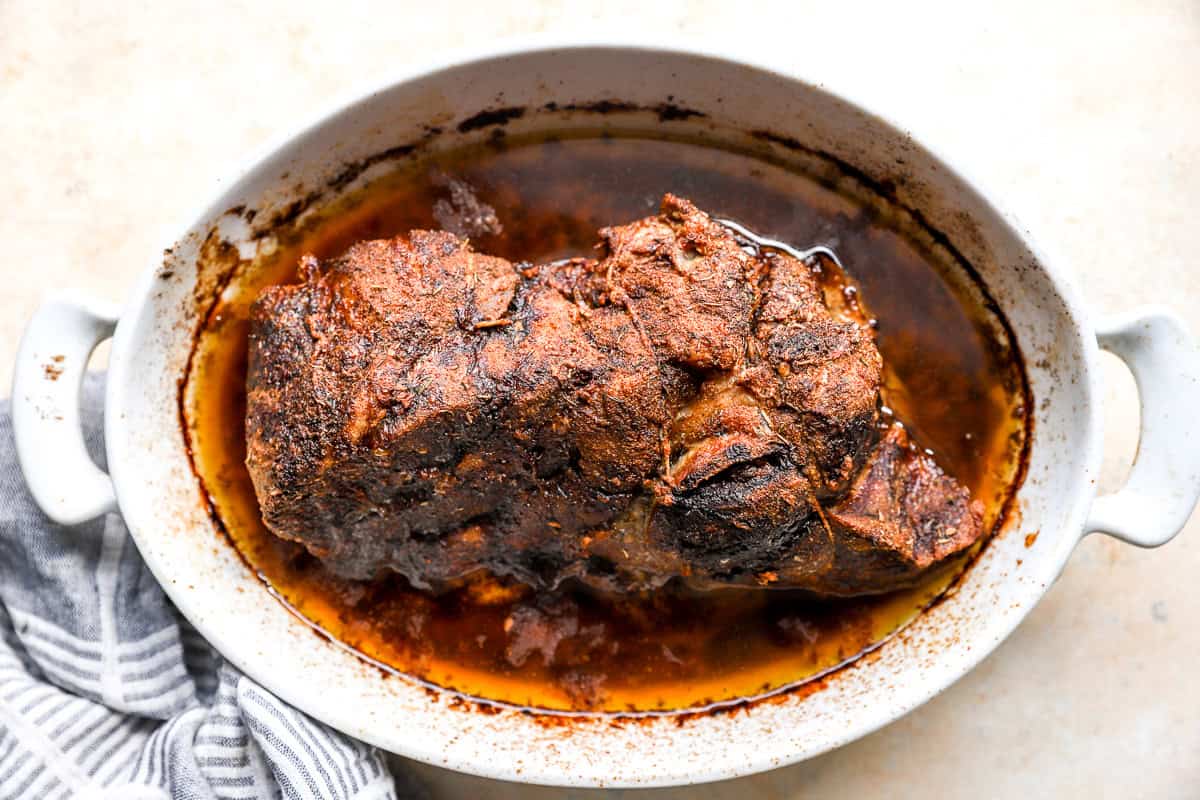
Slow roast until tender: In a measuring cup or bowl, whisk together 1 cup chicken broth, 2 tbsp soy sauce, 1 tbsp Dijon mustard, and 2 minced garlic cloves until combined. Pour half of the broth mixture into the bottom of the roasting pan around the pork. Reserve the remaining mixture in the refrigerator for later. Continue roasting the pork shoulder at 275°F until the internal temperature reaches 180–200°F, about 1½ hours per pound. The pork should feel very tender when pierced with a fork, and the meat should start pulling apart easily near the edges. Check the roast occasionally during cooking and loosely tent it with foil if the top starts becoming too dark before the inside finishes cooking.
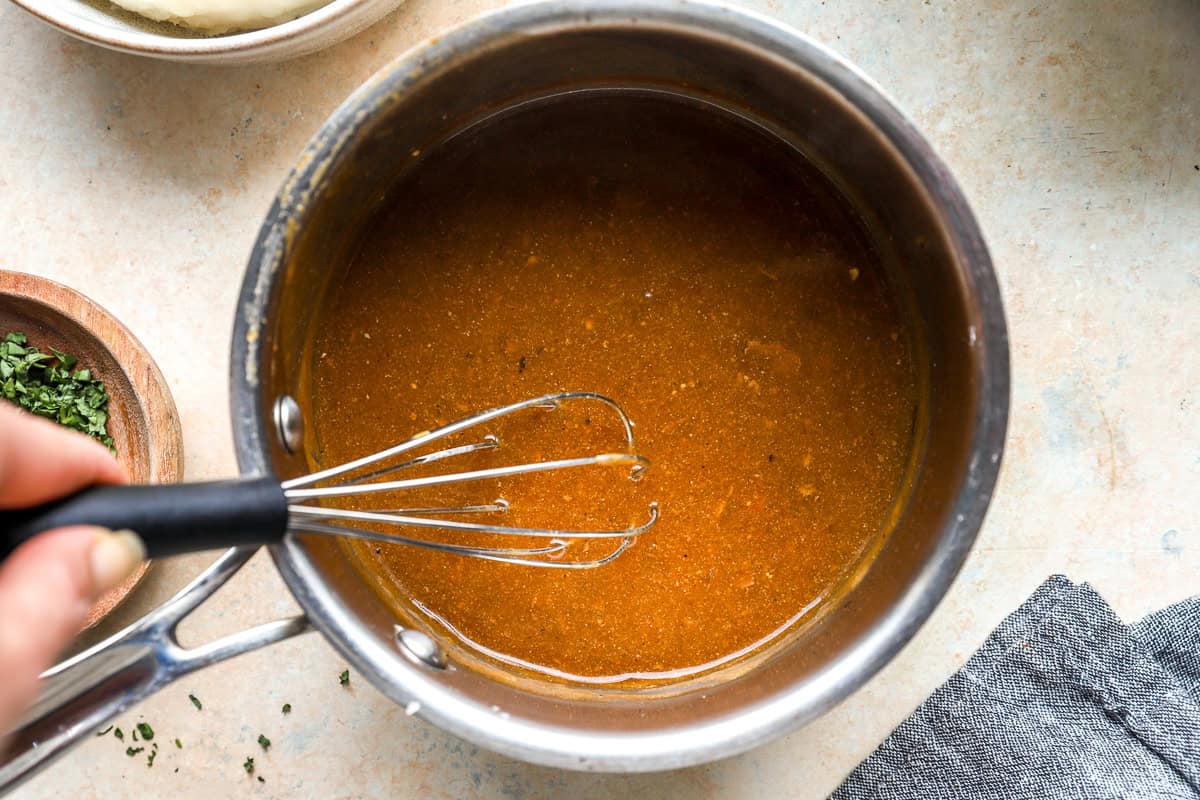
Make the gravy while the pork rests: Transfer the pork shoulder to a cutting board and let it rest for 15 minutes before slicing or shredding. This helps the juices redistribute throughout the meat. Skim excess fat from the pan drippings, then pour the remaining juices into a saucepan along with the reserved broth mixture. Bring the mixture to a gentle boil over medium heat. In a small bowl, whisk together 1 tbsp cornstarch and 1 tbsp water until smooth. Slowly whisk the slurry into the saucepan and continue cooking for 1–2 minutes, whisking constantly, until the gravy thickens enough to coat the back of a spoon.
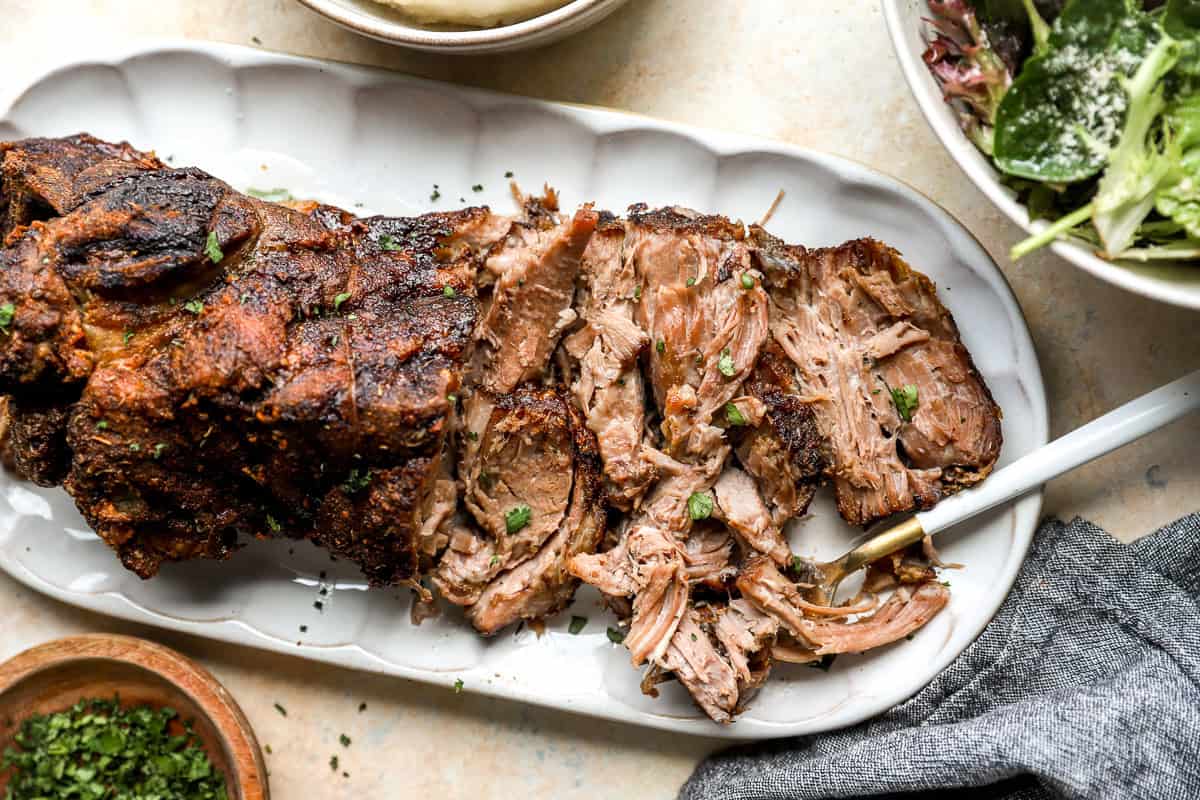
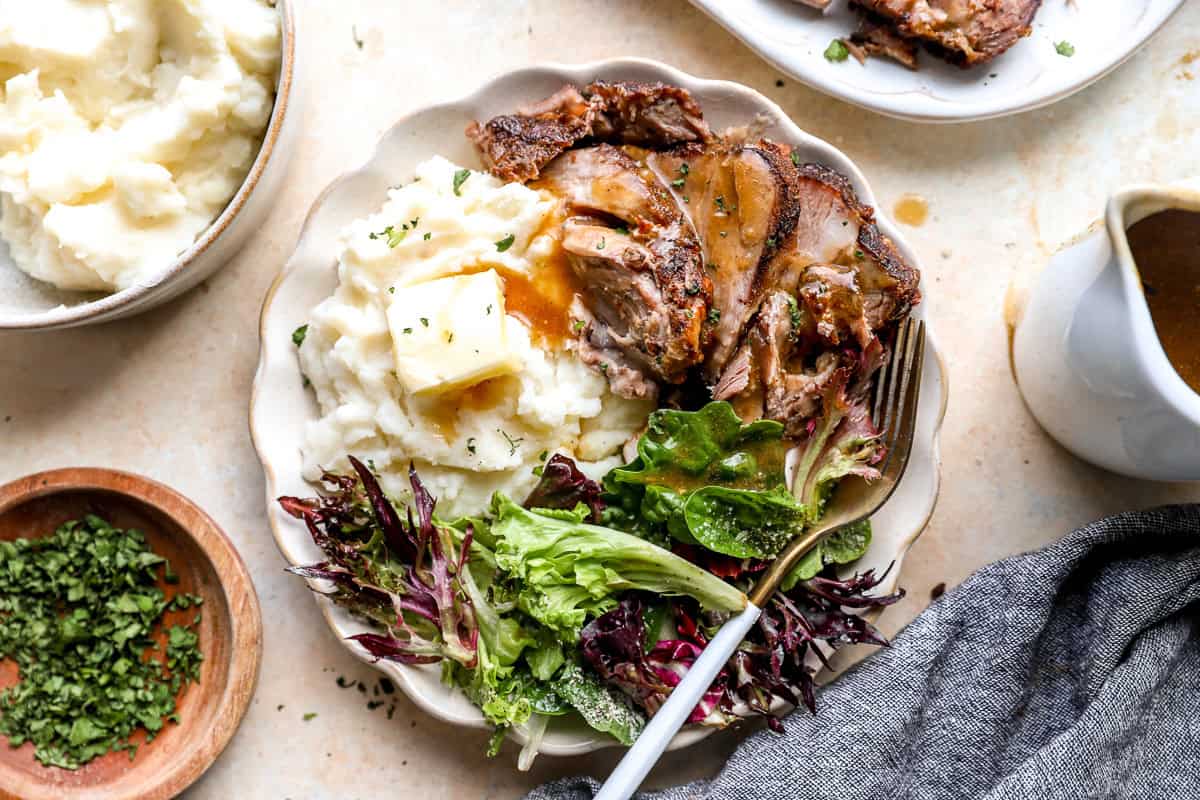
Slice and serve: Slice or shred the pork shoulder and serve warm with the homemade gravy spooned over the top. Enjoy!
How to Store and Reheat
Store leftover pork and gravy in separate airtight containers in the refrigerator for up to 4 days. Freeze sliced or shredded pork in freezer-safe containers or zip-top bags for up to 3 months. I like adding a little extra gravy to the container before freezing because it helps keep the pork moist during reheating. Reheat the pork in a covered skillet or baking dish with a splash of broth or gravy until hot and juicy, then warm the gravy separately and spoon it over the top before serving. To make prep easier, season and tie the pork shoulder up to 24 hours ahead and keep it covered in the refrigerator until ready to cook.
Serving Suggestions
I love serving this roasted pork shoulder for Sunday dinners, holiday meals, or cold-weather comfort food nights. The rich gravy makes it especially good over mashed potatoes or buttered egg noodles. For a lighter side, pair it with roasted green beans, glazed carrots, or a crisp salad. I also love using leftovers for sandwiches the next day with extra gravy spooned right over the top. Warm dinner rolls or crusty bread are perfect for soaking up every bit of the sauce.
More Roasted Dinner Recipes
- Slow Cooker Pulled Pork: This slow cooker pulled pork has the same fall-apart tender texture as this roasted pork shoulder, but with an even more hands-off cooking method. It’s perfect for sandwiches, tacos, or easy meal prep throughout the week.
- Pot Roast: If you love cozy slow-roasted dinners with rich gravy, this pot roast is another comfort food favorite. The beef becomes incredibly tender and pairs perfectly with mashed potatoes or roasted vegetables.
- Roast Chicken: This classic roast chicken delivers crispy skin, juicy meat, and simple, comforting flavor using a similar oven-roasting method. It’s one of my favorite easy dinners when I want something hearty but reliable.